SpaceX Stocks Slide After Starship Booster Is Lost in Test Flight
SpaceX stock fell after its Starship booster failed a catch attempt and exploded in the Gulf of Mexico, though the spacecraft reached orbit. Morgan Stanley kept its $300 target.

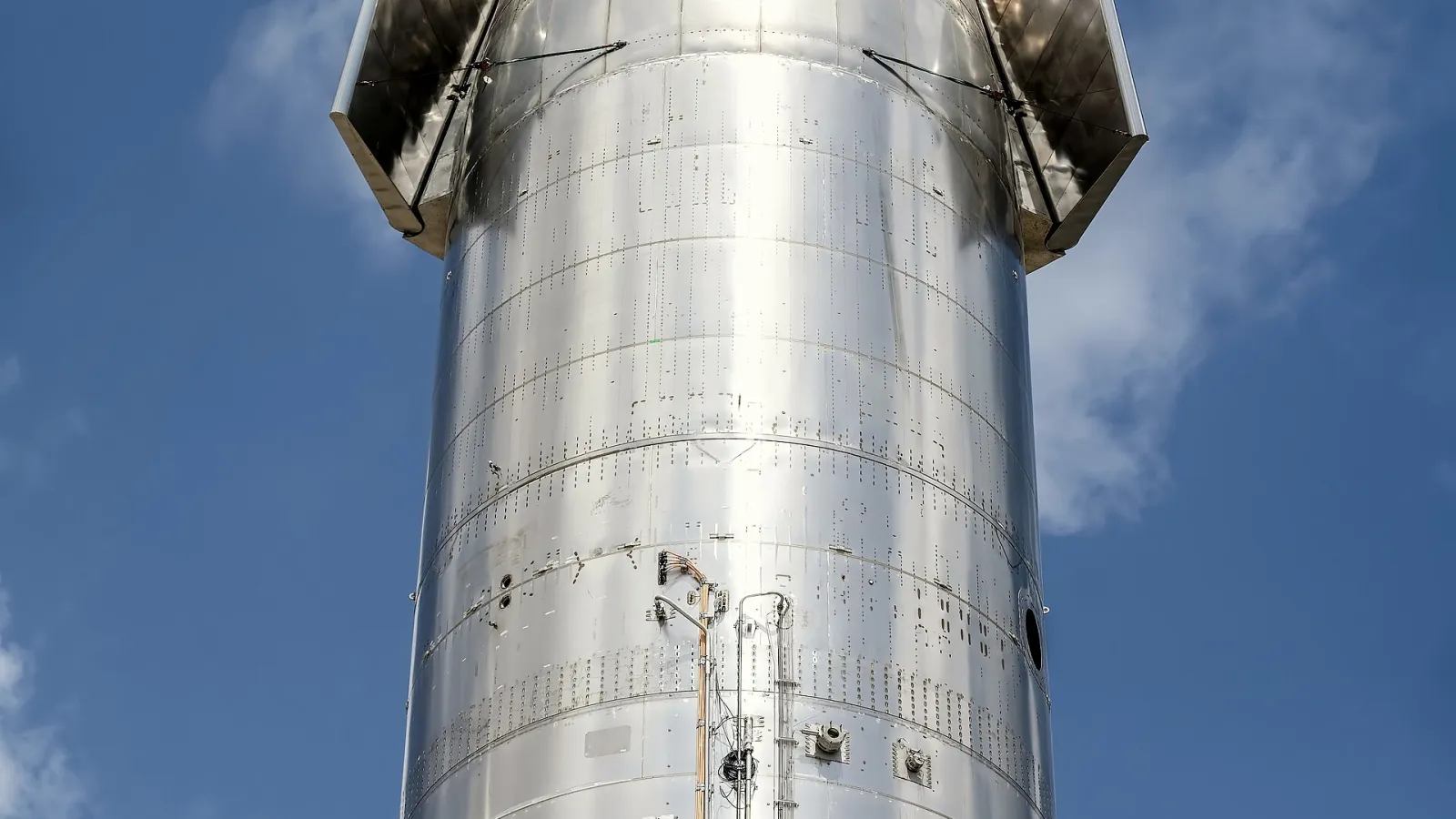
SpaceX stock slipped after the company's latest Starship flight ended with the Super Heavy booster lost in the Gulf of Mexico, even as the spacecraft reached orbit and released 26 Starlink satellites. The mixed result came on November 13 as investors weighed the stock's steep fall from its June high against the company's long-term plans.
A historic catch attempt ends in failure
SpaceX tried to catch both the Super Heavy booster and the Starship upper stage. The booster catch failed, and the booster fell into the Gulf of Mexico and exploded. The spacecraft itself stayed on course and reached orbit.
The attempt to catch the returning spacecraft with mechanical arms on the launch tower was meant to be the first recovery of a Starship coming back from orbit. SpaceX shares slipped 2% after hours once the booster was lost. SpaceX gave no explanation for the booster failure in the reports available to us.
Launch commentator Kate Tice reacted on the broadcast, saying the outcome was not the news the team had hoped to hear, according to The Associated Press. Previous Starship spacecraft, 14 in total, had all ended up in the ocean.
Analysts stay divided on the stock
Morgan Stanley analyst Adam Jonas reiterated his Overweight rating and $300 price target on November 13. Before the launch, he had called the flight "one of the most significant potential catalysts in SpaceX's nearly 25-year history." At the time, shares were about 31% below their June closing high and only slightly above the $135 IPO price.
Jonas has also said SpaceX traded at 17.6 times 2028 adjusted earnings, just below the S&P 500's 17.7 times. He has warned that the shares could slide toward $100 within a year if AI momentum slowed. Morgan Stanley's $300 target depends heavily on artificial intelligence, with $170 of that value assigned to the enterprise AI business.
Not all analysts share that view. Raymond James analyst Brian Gesuale started coverage at Strong Buy with an $800 target, according to TheStreet. NYU professor Scott Galloway has argued the stock is far too expensive, and former Fidelity fund manager George Noble said the valuation was outrageous relative to revenue.
Spending outpaces revenue
SpaceX reported third-quarter revenue of $14.6 billion and net earnings of $4.4 billion. Capital spending reached $19.6 billion, and the finance chief expects $35 billion to $40 billion in the fourth quarter. The Super Intelligence unit brought in $7.5 billion, more than half of sales.
On November 12, the company announced more than $74 billion in data center projects in Texas and Arizona, including a roughly $50 billion site in rural Cochise County, Arizona. Texas Governor Greg Abbott has paused new construction pending a statewide audit, according to The Hill. Analysts expect a large cash shortfall through 2028, and one AI customer accounted for about a third of third-quarter revenue.
Reports also said SpaceX and Tesla could announce a merger by December or early 2027, with Musk saying both companies had formed independent board committees. Bloomberg reported the possibility, and Stocktwits relayed it. The companies have not announced a merger.
What we know so far
SpaceX shares debuted at $135 on June 12, hit a record $225.64 on June 16, and traded around $138 on November 13. The stock's next major test is the fourth-quarter report expected in early 2027, which will show whether revenue goals were met and how the spending is being funded. NASA also expects to choose between SpaceX and Blue Origin for Artemis lunar landing work a year before the Artemis IV landing, which could come as early as 2028, according to The Associated Press.
The flight's booster loss and the company's next catch attempt will be closely watched by investors and analysts.
Background: Starship reusability is central to SpaceX's valuation case. Pivotal Research said the long-term case depends on flying each vehicle 20 to 50 times.