Lifestyle Explainer
Morocco Returns to GMT After Eight Years: What Changes for Daily Life
Morocco set its clocks back one hour on 20 September, ending the year-round GMT+1 system adopted in 2018. Here is what it means for mornings, travel and sleep, and why it became a political issue days before the vote.
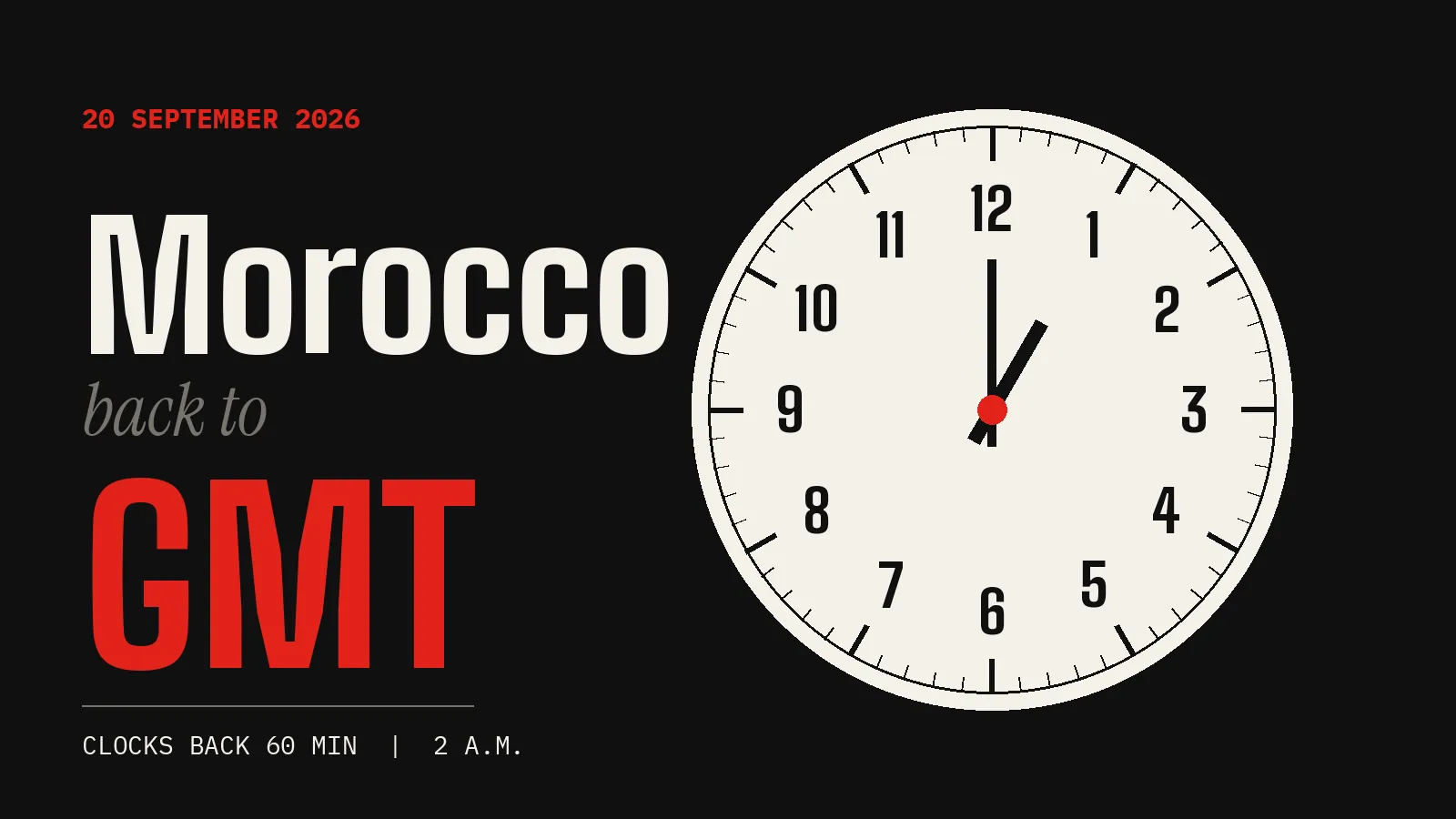
The Morocco GMT time change is now in effect. Clocks were set back 60 minutes at 2 a.m. on Sunday 20 September, ending the year-round GMT+1 system introduced in 2018.
Morocco's Authenticity and Modernity Party (PAM) emerged from the 23 September vote as the largest party with 97 seats, up from 87 in 2021, according to provisional results. The National Rally of Independents (RNI), which led the last government, fell from 102 seats to 66. Istiqlal dropped from 81 to 65. A party needs 198 of the 395 seats for a majority, so coalition negotiations will decide who governs. Morocco’s elections: Fragmentation, disengagement and PJD’s major comeback | Elections News | Al Jazeera +2
A sharp fall in turnout
The Interior Ministry put national turnout at 38.02%, well below the 50.35% recorded in 2021. Al Jazeera notes it is the second-lowest in parliamentary elections since King Mohammed VI took the throne in 1999. Official tabulations from the state news agency give a slightly different figure of 38.08%, so sources vary by a few hundredths of a point. Morocco World NewsAl Jazeera
Participation was far higher in some southern regions, reaching 77 percent in Laayoune-Sakia El Hamra and 61 percent in Dakhla-Oued Ed-Dahab. Al Jazeera
Why many voters stayed home
AP described an election shaped by frustration among young people, high unemployment despite a thriving economy, and demands for better schools, hospitals and housing. It was the first vote since deadly youth-led protests nearly a year ago. ABC NewsABC News
The PJD's comeback
Al Jazeera reports that the Justice and Development Party (PJD) quadrupled its seats. The Left Alliance and the PJD alleged electoral irregularities in Tiflet and Oujda. Al JazeeraYabiladi
What happens next
The results are provisional and the head of government has not yet been named. The key question is which parties can assemble a majority, and how the next cabinet responds to voters who chose not to take part.