El Niño Set to Be Declared 'Super' as Pacific Warming Strengthens
Forecasters expect the Climate Prediction Center to officially declare a Super El Niño, a strong warming of the equatorial Pacific that is already reshaping hurricane seasons and winter weather.

A Super El Niño is expected to be officially declared within hours, according to FOX Weather, as warm water in the equatorial Pacific reaches levels that forecasters have been anticipating for months. The U.S. National Oceanic and Atmospheric Administration's Climate Prediction Center (CPC) is expected to make the announcement, and the event is projected to persist through the coming winter.
The designation applies when water temperatures in the equatorial Pacific are at least 2 degrees Celsius above average for at least three consecutive months. Evaluations for July, August and September did not meet the threshold for the "Very Strong" or "Super" category. However, the CPC was expected to report on Thursday that the August, September and October period did reach the 2 degrees Celsius level, according to FOX Weather.
Hurricane seasons diverge sharply
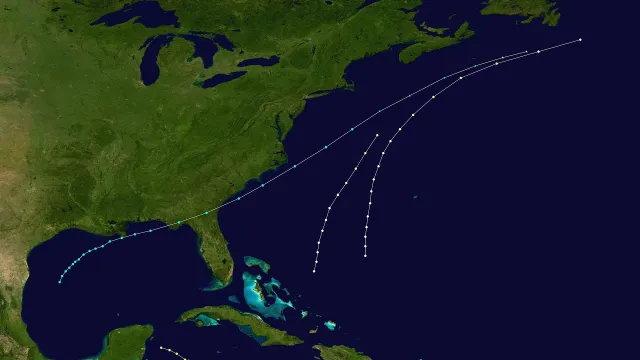
The climate pattern has already shaped tropical activity on both sides of the continent. The Eastern Pacific has recorded one of its busiest seasons on record, with only four names left on the list for the year. The Atlantic, by contrast, has had a record under-active season, with one hurricane and 10 named storms so far.
In the Atlantic, wind shear has limited storm development. In the Pacific, warm ocean temperatures and weaker wind shear have helped fuel tropical systems, FOX Weather reported.
What the winter could bring
NOAA's Winter Outlook for 2026-27 expects more storms from Southern California across the southern tier of the United States to Florida. During a strong El Niño, the Pacific jet stream tends to become more extended and active, steering storms across the southern half of the country. Temperatures across the Southeast are expected to remain near normal, despite the increased storm activity.
Forecasters say the current event most resembles the 1997-98 winter. That season brought a major October snowstorm from Colorado to Maine, followed by flooding rains and a major ice storm across the Midwest, Southeast and Northeast after the New Year. Scientists caution that it is too early to know how this year's event will compare with past ones.
Global and regional effects
Grist reports that this El Niño is already the strongest on record, and it may not peak for another month or two. Scientists have estimated that the additional heat linked to the event could contribute to around 450,000 deaths worldwide, a figure Grist attributes to scientific estimates. Drought is affecting parts of the Amazon rainforest, while extreme rainfall is hitting the Greater Horn of Africa.
In the United States, the impacts vary widely by region. Grist reports that California typically sees more rainfall and flooding, while the Midwest may have a milder, drier winter. The Southeast could be colder and wetter. In Alaska, warmer winter temperatures and more rain instead of snow are possible, according to state climatologist Martin Stuefer, who cautioned against firm conclusions at this stage. The National Weather Service says most strong El Niño years have brought below-average snowfall to Alaska.
Hawaii and the wider Pacific have also been affected. Kona lows and hurricanes have caused flooding and power outages in Hawaii this year, and Guam and the Commonwealth of the Northern Mariana Islands face an above-normal typhoon season, according to NOAA.
Economic impact and what comes next
NPR's Short Wave programme has examined how the event could affect household budgets, though the details of that report were not available for this summary. Forecasters expect the Super El Niño to remain in place through late fall and winter, with La Niña conditions forecast to take over by spring 2027. Forecasters stress that models can show general regional trends, but they cannot predict the weather in a specific place weeks ahead.
For now, the key step is the CPC's official declaration. Its outlook will shape seasonal forecasts, hurricane preparedness and winter planning across the United States and the Pacific.