Stock market futures slide after Monday's tech rally, Fed rate-hike fears weigh
US stock market futures fell on Tuesday after Monday's sharp tech-led rally, as traders weighed Federal Reserve rate-hike risks, new Iran sanctions and Nvidia's pullback.

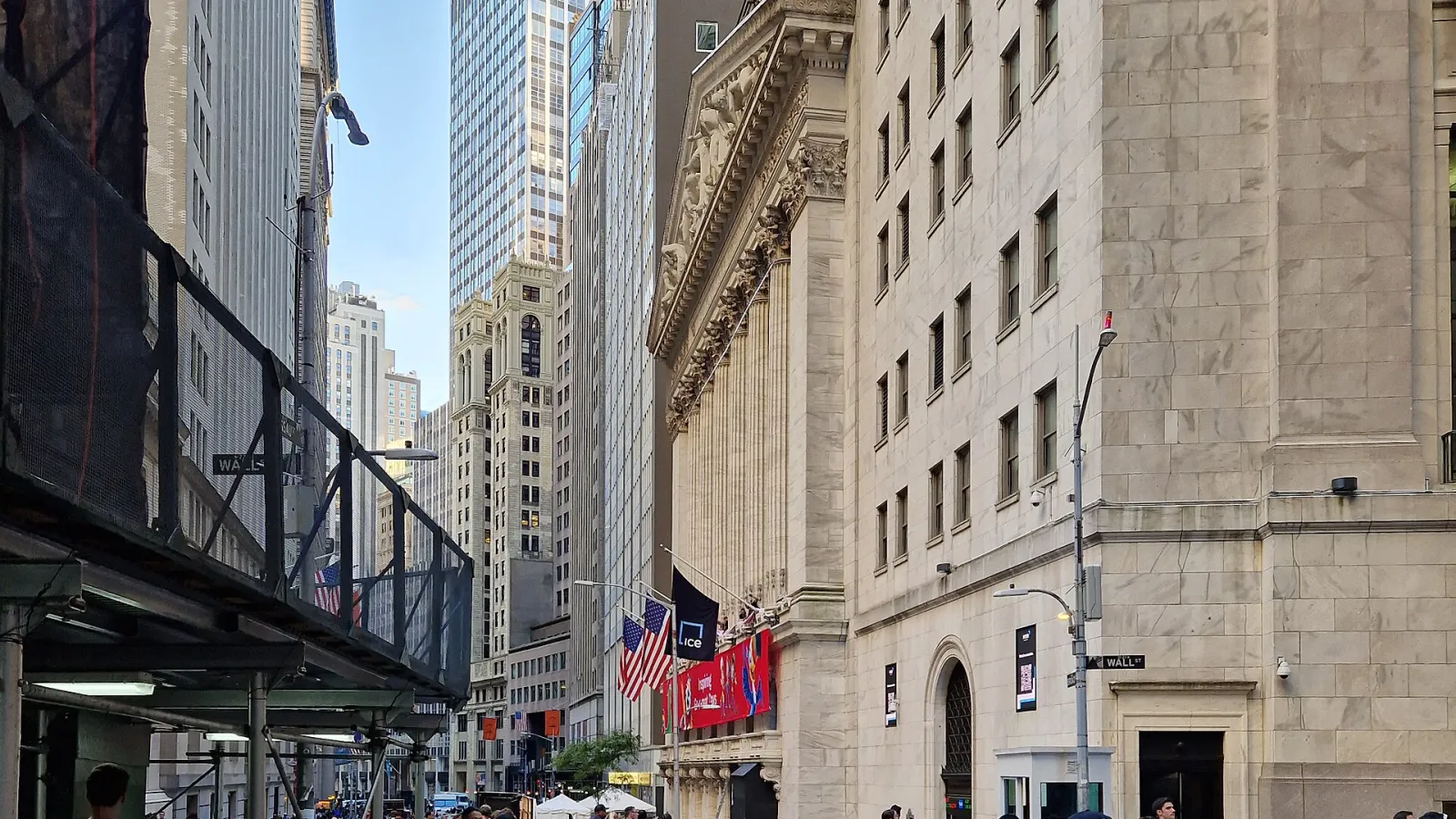
US stock market futures slid on Tuesday, 24 November, as Wall Street cooled after Monday's sharp tech-led rally. Dow Jones, S&P 500 and Nasdaq futures were all trading lower in early premarket hours, with losses concentrated in technology and artificial intelligence shares. The moves came ahead of the 9:30 a.m. ET opening bell.
A tech rally followed by a pullback
On Monday, the Dow rose 3.01%, the S&P 500 jumped 4.73% and the Nasdaq Composite soared 6.51%. Those were the biggest single-day gains for the S&P 500 and Nasdaq since April 2025, according to Clarín's market report.
The rally was driven by Nvidia's decision to reinstate co-founder Jensen Huang as chief executive. Nvidia shares rose 31.5%, their best day in 23 years, restoring nearly $1 trillion in market value.
Analysts said Tuesday's dip was largely a breather. Kathleen Brooks, research director at XTB, said Nvidia's decline was to be expected after such a large move, adding that Huang's return does not mean the challenges facing AI are over. Investors remain concerned about debt-funded spending on AI data centers, regulatory scrutiny and Huang's scheduled congressional testimony on 3 December.
Rate-hike expectations and Iran sanctions
Interest-rate expectations added to the pressure. According to CME Group's FedWatch tool, traders were pricing in a 95% probability of a quarter-point rate hike at the Federal Reserve's 8–9 December meeting, and a 5% chance of a half-point increase. New York Fed President John Williams said on Monday that persistently high inflation points toward tighter monetary policy.
The rate-sensitive 2-year Treasury yield edged up to 4.67%. Evercore ISI's Krishna Guha said talk of faster tightening adds stress, while Fed Chair Kevin Warsh's silence leaves markets guessing about his stance.
Geopolitical tension also weighed on sentiment. Treasury Secretary Scott Bessent announced new US sanctions targeting Iranian exchange houses, front companies and key personnel, and reports emerged of tanker incidents east of the Strait of Hormuz.
Energy, metals and global markets
Energy and metals also traded lower early on Tuesday. Brent crude dipped to $88.75 a barrel, near a three-month low, gold eased to $3,619.70 an ounce, and copper gave back 3%.
Overseas markets carried some of Monday's momentum. Taiwanese shares rose 9%, with TSMC and Foxconn nearing their 10% daily limits. South Korea's Kospi gained roughly 6.3% to 7%, Japan's Nikkei climbed nearly 4%, and Europe's STOXX 600 slipped 0.1%.
What comes next
Strategists stressed that Tuesday's pullback is not a market crash and recovers only a fraction of Monday's gains. Premarket futures trade on thin overnight volume, so losses could narrow or reverse once regular trading starts at 9:30 a.m. ET. Trading volume is expected to thin further as the Thanksgiving holiday approaches, with the inflation data and Fed signals still ahead. Nvidia's Huang testimony on 3 December and the Fed meeting on 8–9 December are the next key dates for investors.
Early futures figures are preliminary and can change once the regular session opens.